



Why Is My Air Conditioner Frozen? 4 Causes of a Frozen AC Unit
An air conditioner freezes when the temperature of its evaporator coil drops below 32 degrees Fahrenheit, causing moisture in the air to freeze on contact and form a layer of ice across the unit.
If you suspect your air conditioning system is freezing up, it almost always stems from one of four primary issues:
- Insufficient Air Flow – Dust, dirty filters, or closed vents block warm room air from reaching the cooling coil.
- Problem With the Refrigerant in the System – Leaks lower system pressure, causing refrigerant to expand at sub-freezing temperatures.
- Outside Temperatures – Running your cooling system when outdoor air drops below 62 degrees Fahrenheit disrupts proper coil temperature balance.
- Mechanical Failure – Broken fan motors, stuck relays, or damaged blower wheels stop warm air from moving through the system.
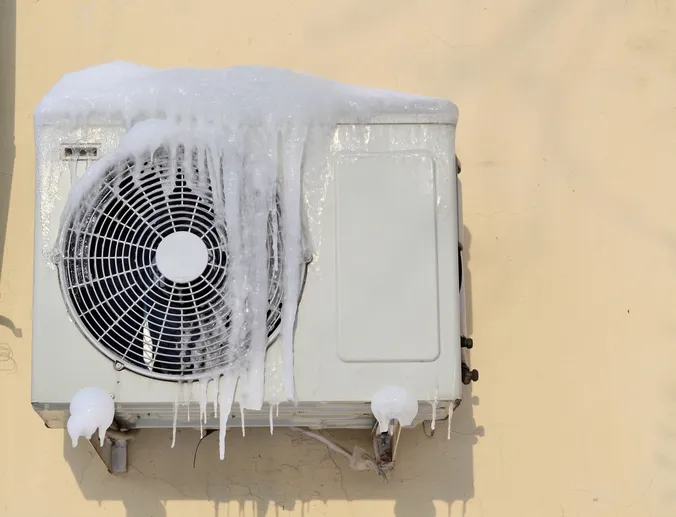
Common Causes of a Frozen Air Conditioner
Insufficient Air Flow
An air conditioner works by pulling warm indoor air across an evaporator coil filled with cold refrigerant. If airflow is restricted by a severely dirty air filter, crushed ductwork, or blocked return vents, there is not enough warm air passing over the coil to balance the cold refrigerant inside. As a result, the coil’s temperature drops below freezing, causing normal condensation on the fins to instantly turn to ice. Because replacing your air filter matters so much to baseline airflow, a clogged filter is frequently the sole root trigger of a frozen coil.
Problem With the Refrigerant in the System
Refrigerant operates inside a closed-loop system designed to maintain specific temperature and pressure levels. When a system develops a pinhole leak, the drop in overall pressure causes the remaining refrigerant to expand at a much colder temperature than intended. This rapid pressure drop brings the physical surface of the evaporator coil well below freezing, icing over any moisture pulled from your home’s air.
Outside Temperatures
Central air conditioners are designed to operate within specific outdoor ambient temperature ranges. If you run your air conditioning on cool spring or fall nights when outdoor temperatures fall below 62 degrees Fahrenheit, the system cannot maintain proper pressure within the outdoor condensing unit. This pressure imbalance travels through the system, lowering the indoor evaporator coil’s temperature and causing ice to form across its surface.
Mechanical Failure
A failure of key mechanical components inside your air handler will cause a system to freeze even if the filter is clean and refrigerant levels are correct. If a blower motor burns out, a fan belt snaps, or a control relay sticks, the indoor fan stops spinning while the compressor outside continues running. Without the fan actively forcing warm indoor air across the coil, cold refrigerant lowers the coil temperature within minutes, coating the entire indoor section in solid ice.
What Should You Do If This Happens To You?
If you physically see ice on your indoor unit, copper lines, or outdoor cabinet, continue using the system as-is will cause severe mechanical damage—including a ruined compressor. Follow these precise steps immediately:
- Turn off the cooling system at the thermostat. Switch the system mode from “Cool” to “Off.” This cuts power to the outdoor compressor and stops more ice from forming.
- Turn the fan setting to “On.” Change your thermostat’s fan setting from “Auto” to “On.” This forces the indoor blower fan to run continuously, blowing room-temperature air across the frozen coil to speed up the melting process.
- Do not attempt to physically chip or scrape ice away. Evaporator coil fins and copper lines are delicate. Using knives, screwdrivers, or heat guns can puncture refrigerant lines or damage internal fins, creating far more expensive repairs.
- Prepare for melting water. As the ice thaws, it will produce a high volume of condensation. Ensure your condensate drain line is clear, and place towels around the indoor unit to catch overflow if the drain pan spills over.
- Allow the unit to thaw completely. Complete thawing typically takes between 2 to 12 hours depending on how heavily iced the system is. Do not turn the cooling back on until all visible ice has melted from the lines and cabinet.
If your air filter was severely clogged, replace it with a clean one before turning the cooling back on. If the system freezes again after thawing and replacing the filter, turn it off immediately and schedule a professional inspection.
Why Frozen Coils and Warm Air Are Often Connected
When ice forms on an evaporator coil, it acts as an insulating barrier that prevents heat exchange and blocks the path of moving air.
As the ice sheet grows thicker, the blower fan can no longer push air through the solid block of ice on the coil. The small amount of air that does manage to squeeze past or bypass the coil enters your ductwork without being cooled. This results in warm air coming from your vents despite your air conditioner running non-stop. If your AC goes from cooling normally to blowing tepid air over several hours, an icing coil is often the culprit.
How to Avoid One of Metro Atlanta’s Most Common AC Problems
An iced-over evaporator coil is high on the list of common residential AC problems in Metro Atlanta.
Metro Atlanta’s high summer humidity forces your air conditioner to draw tremendous amounts of moisture out of indoor air. Under normal conditions, this water simply drains out through your condensate line. However, when airflow drops or refrigerant leaks occur during prolonged heat waves, that high humidity provides an endless supply of water that quickly freezes into thick layers of ice across your unit. Routine seasonal inspections and timely filter replacements are key to preventing summer shutdowns.

Don’t Wait. Schedule Your Professional AC Repair Today with Empire
Attempting to run a frozen air conditioner can cause liquid refrigerant to flood back into the compressor, leading to catastrophic system failure.
If your unit continues to freeze up after you have replaced your air filter and fully defrosted the system, you need an experienced technician to locate refrigerant leaks, check system pressures, and test mechanical components. Contact the team at Empire HVAC today to schedule professional AC repair services and protect your system.